Electric Hoists
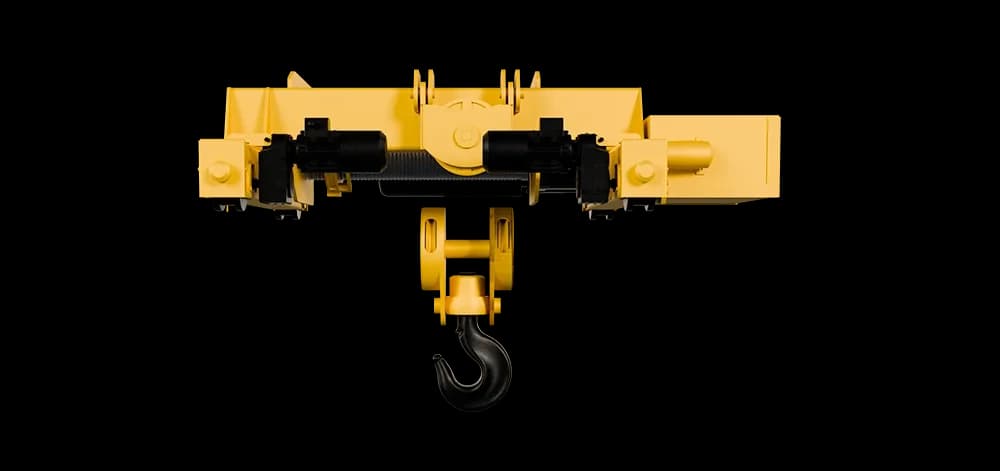
Low-Pin Trolley
The hook block pin is kept as low as possible to reduce overall trolley height. In workshops with limited headroom every centimetre saved is added directly to hook height.
- Suspension
- Low-pin
VIEW PRODUCT
The unit that actually does the lifting: the crane trolley. How it sits on the girder directly determines how much of the building’s headroom can be used. Low and super-low models increase hook height in buildings with limited headroom; underslung models run on monorail lines; side-hung models suit wall-side and special track applications.
5 products
Electric Hoists
The hook block pin is kept as low as possible to reduce overall trolley height. In workshops with limited headroom every centimetre saved is added directly to hook height.
VIEW PRODUCT
Electric Hoists
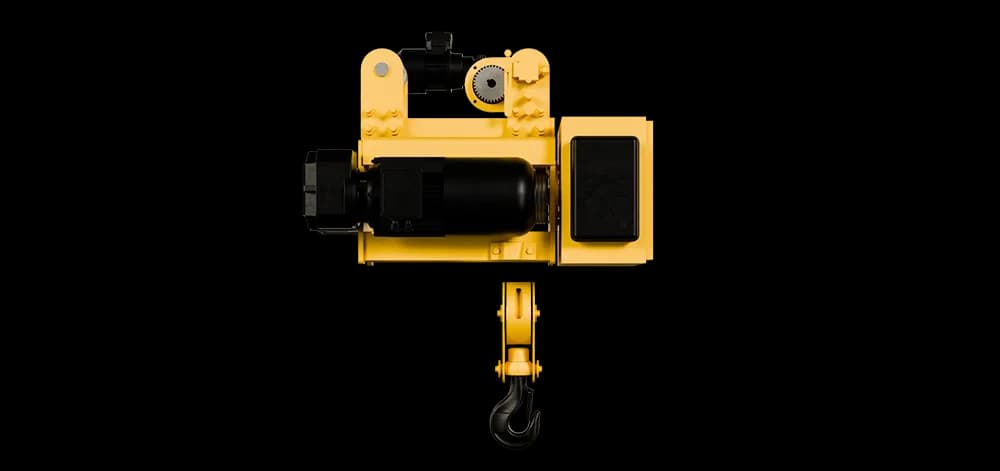
A trolley that travels suspended, using the lower flange of the beam as a rail. It is the standard solution for monorail lines and single girder cranes, reaching several stations on switched tracks.
VIEW PRODUCT
Electric Hoists
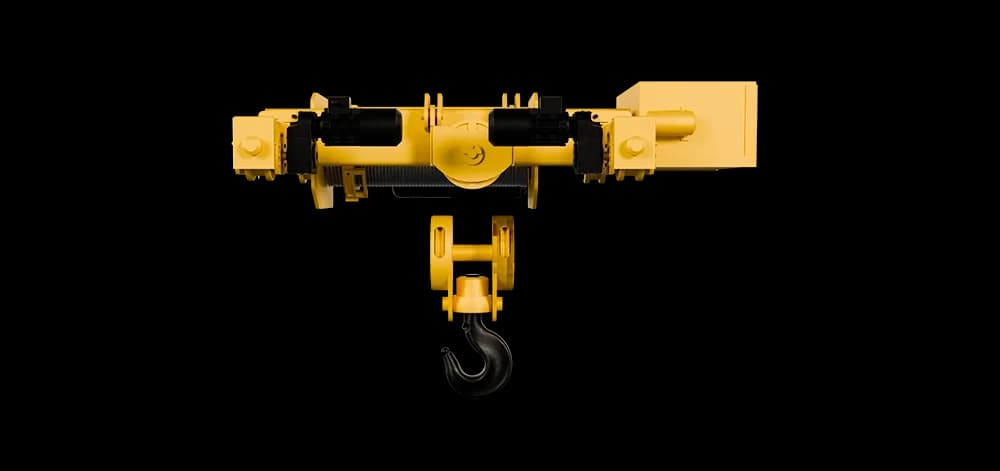
Drive and hook block are rearranged to reduce overall trolley height to a minimum. In buildings with genuinely restricted headroom it delivers lifting height a standard trolley cannot reach.
VIEW PRODUCT
Electric Hoists
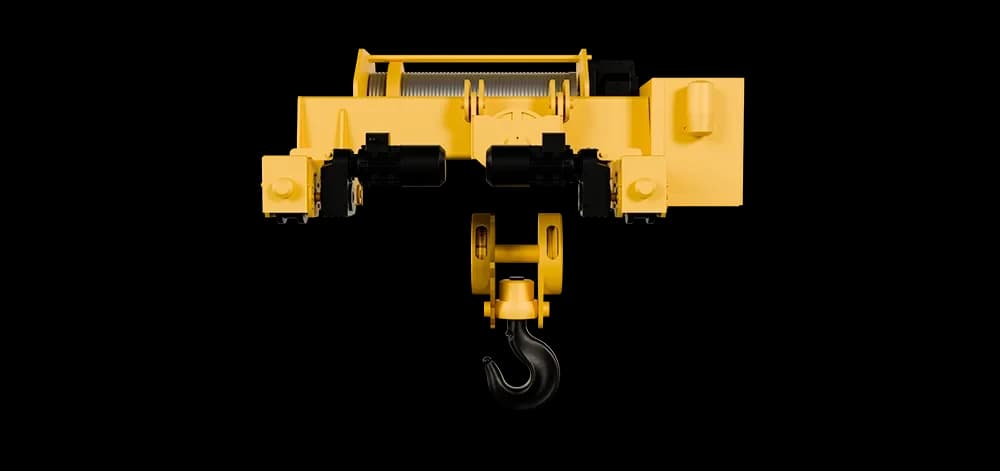
The classic layout with the hook block attached in its standard position. Where headroom is not a constraint it offers a roomier arrangement, easier servicing and lower cost.
VIEW PRODUCT
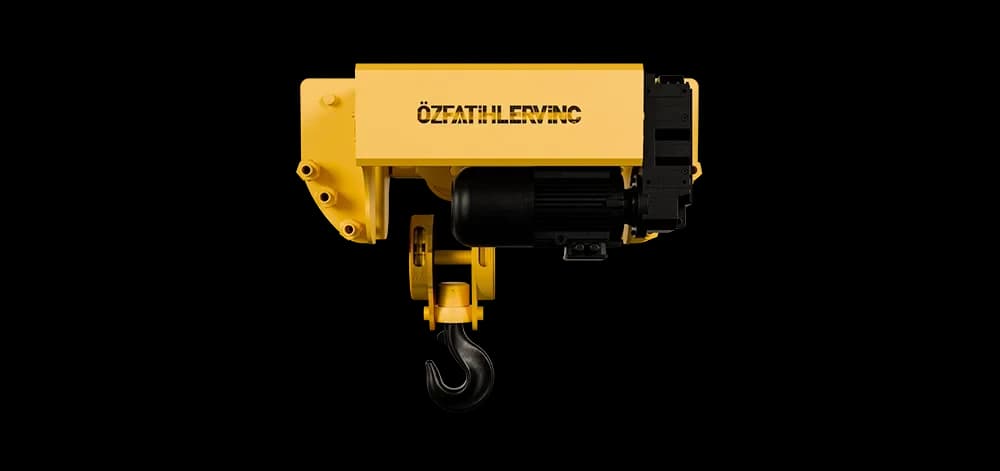
Electric Hoists
A trolley attached to the side face of the beam rather than its lower flange. On wall-side lines and obstructed routes it shifts the hook axis sideways to make work possible.
VIEW PRODUCT
Share the span, load and operating conditions of your facility; we will determine the right crane type and capacity together.