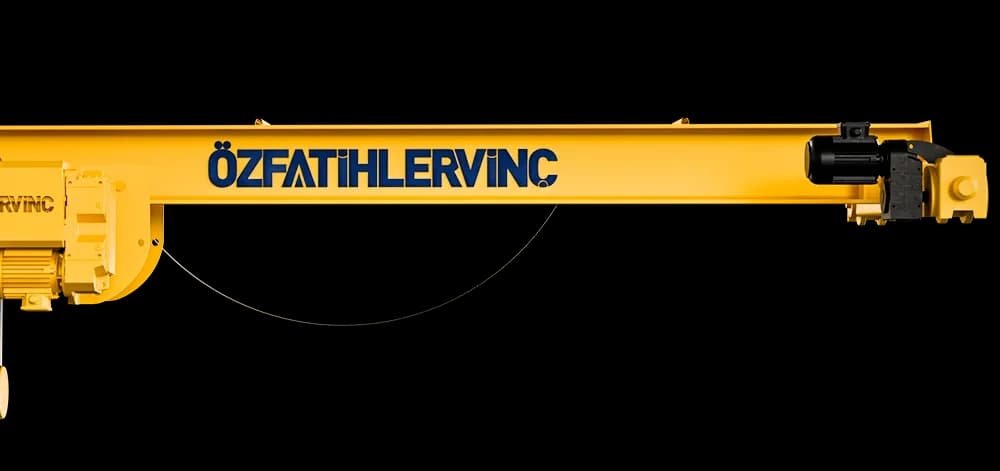
Köprülü Vinçler
Tek Kiriş Köprülü Vinç
Hafif ve orta tonajda en yaygın çözüm. Tek ana kiriş ve alttan askılı kedi ile hafif yapı, düşük tekerlek yükü ve ekonomik kurulum sağlar; mevcut binaya eklemeye en uygun tiptir.
- Kiriş
- Tek kiriş
VIEW PRODUCT
Elektrikli Vinçler
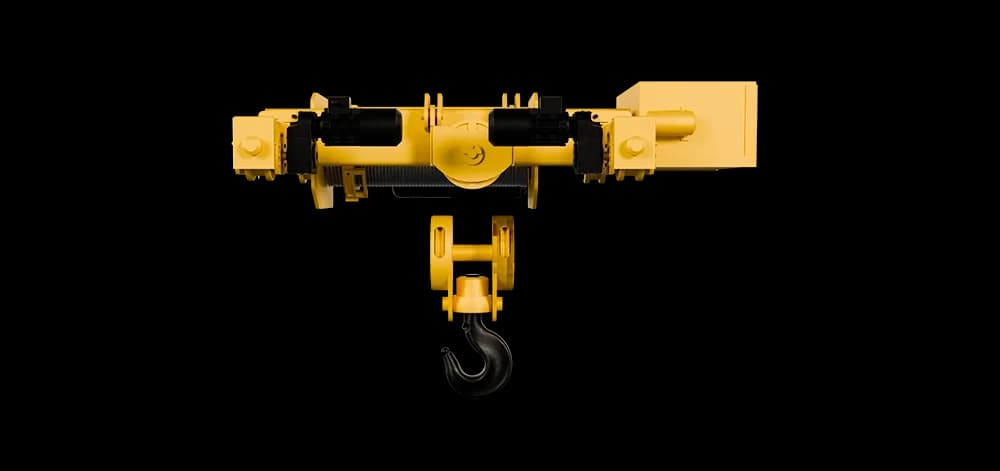
The hook block pin is kept as low as possible to reduce overall trolley height. In workshops with limited headroom every centimetre saved is added directly to hook height.
Priced per project
Suspension
Low-pin
Capacity
Calculated per project
Suspension
Low-pin, top running
Effect on hook height
Reduced trolley height raises the hook level
| Suspension | Low-pin |
|---|---|
| Capacity | Calculated per project |
| Suspension | Low-pin, top running |
| Effect on hook height | Reduced trolley height raises the hook level |
| Girder compatibility | Verified by measuring the profile on site |
| Control | Pendant or radio |
Of the four items setting hook height, only the trolley can be changed afterwards.
For a retrofit the lower flange width and thickness are measured on site and the wheel gauge follows.
The tight arrangement narrows maintenance access; the periodic plan is set accordingly.
A low-pin trolley keeps the hook block pin as low as possible, reducing overall trolley height. Every centimetre saved is added directly to hook height.
The level a load can reach in a facility is set not by building height but by the sum of several items: runway level, girder depth, trolley design and hook block length. Only one of these — the trolley — can be changed afterwards.
That is why the trolley type is the first place to look on an existing crane where hook height falls short. A worthwhile gain can often be obtained by changing only the trolley, without replacing the girder, raising the runway or touching the building.
In workshops with restricted headroom, the difference between a low-pin trolley and a standard one can decide whether a long shaft can be lifted upright or a die passed over a press. The difference is measured in centimetres, but the outcome is binary: it either clears or it does not.
Capacity, duty class and girder profile are assessed together. For a retrofit, the width and thickness of the girder's lower flange are measured on site and the trolley wheel gauge follows those dimensions.
A low build also means components sit more tightly together, which narrows maintenance access slightly compared with a standard trolley; the periodic maintenance plan is set accordingly.
Older workshop buildings, lines beneath a mezzanine, low assembly bays, basement production areas.
Köprülü Vinçler
Hafif ve orta tonajda en yaygın çözüm. Tek ana kiriş ve alttan askılı kedi ile hafif yapı, düşük tekerlek yükü ve ekonomik kurulum sağlar; mevcut binaya eklemeye en uygun tiptir.
VIEW PRODUCT
Elektrikli Vinçler
Tahrik ve kanca bloğu yeniden yerleştirilerek kedinin toplam yüksekliği en aza indirilir. Tavanı gerçekten kısıtlı binalarda standart kedinin ulaşamadığı kaldırma yüksekliğini sağlar.
VIEW PRODUCT
Elektrikli Vinçler
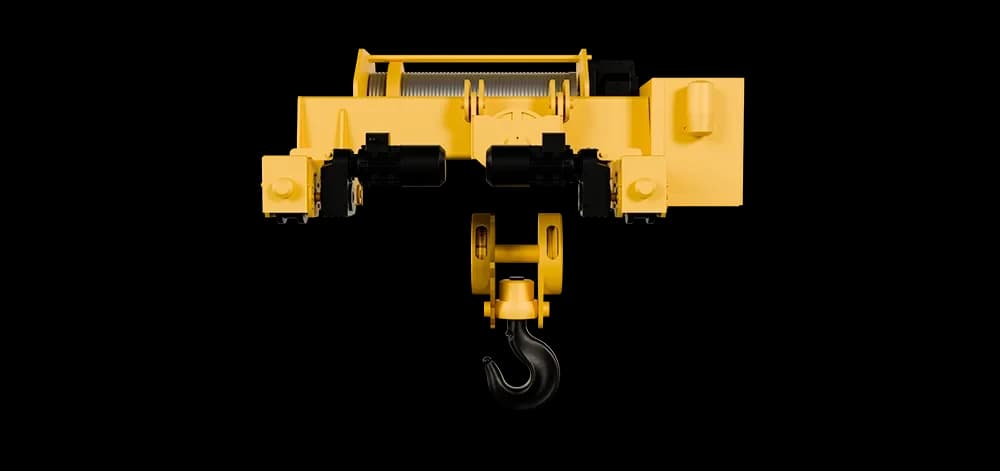
Kanca bloğunun standart konumda bağlandığı klasik düzen. Tavan yüksekliği sorun değilse ferah yerleşim, kolay bakım ve düşük maliyet sunar.
VIEW PRODUCT
Request a quote for this product