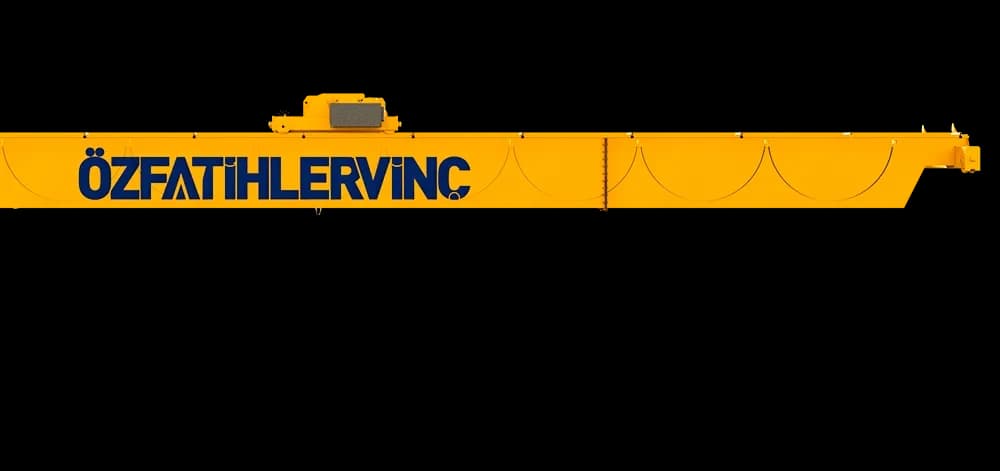
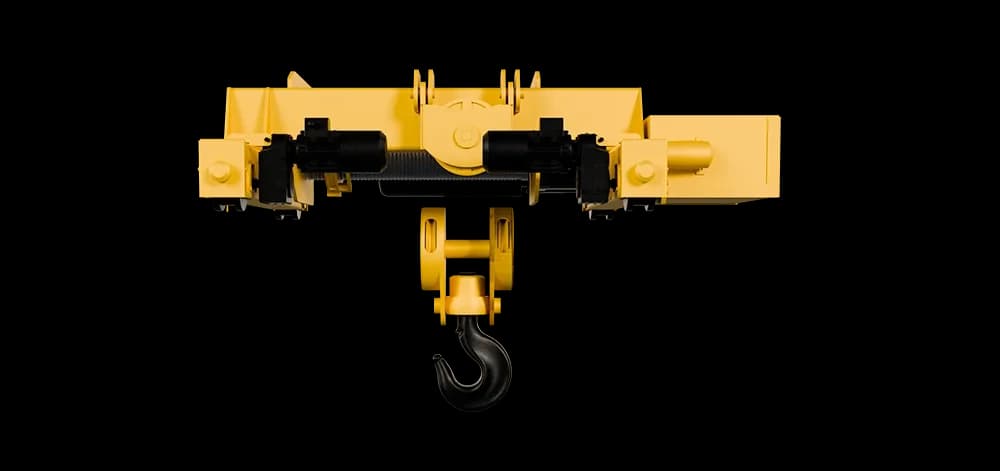
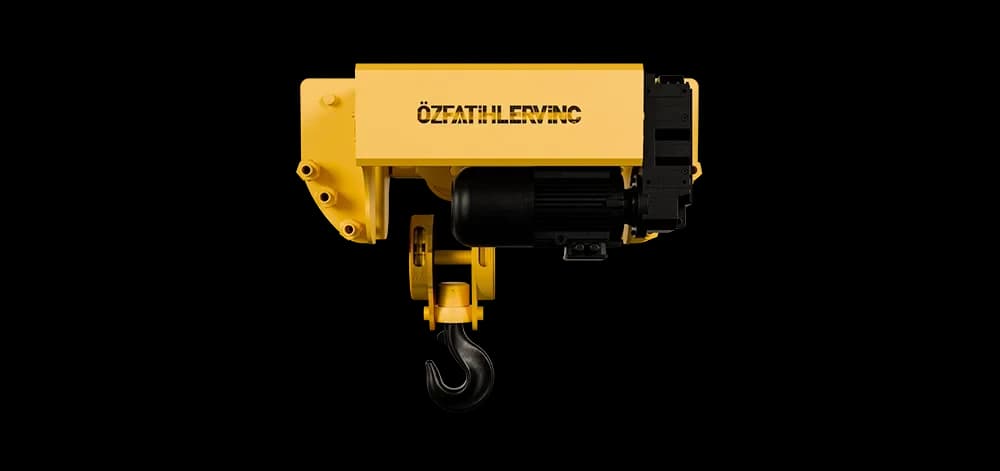
A high-pin trolley is the classic layout, with the hook block attached in its standard position. Where headroom is plentiful there is no need to compromise for a low build.
Why it remains the most chosen layout
Low trolley layouts bring components closer together to gain height. That gain is real but not free: maintenance access narrows, manufacturing cost rises and spare part replacement becomes harder.
If height is not a constraint there is no reason to pay that price. The standard layout offers a roomier arrangement, with gearbox, brake and rope drum in easily reached positions. Periodic maintenance is completed faster and more thoroughly.
The robustness side
A roomier arrangement also allows larger components. Brake and gearbox can be sized more generously than in a compact layout, which reduces heating on high duty-class lines and extends service life.
Sizing
Capacity, duty class, hoisting speed and girder profile are determined from the facility's duty cycle. On high duty-class lines, brake type and gearbox selection are assessed separately; with frequently repeated lifts the brake's heat dissipation capacity becomes decisive.
Hoisting speed is chosen according to whether the load needs precise positioning; two-speed or frequency-controlled drives slow the approach movement and reduce sway.
Applications
Newly built production halls, high-bay steel fabrication shops, foundries and forges, warehouse buildings.