Technology
What does variable frequency drive change on a crane?
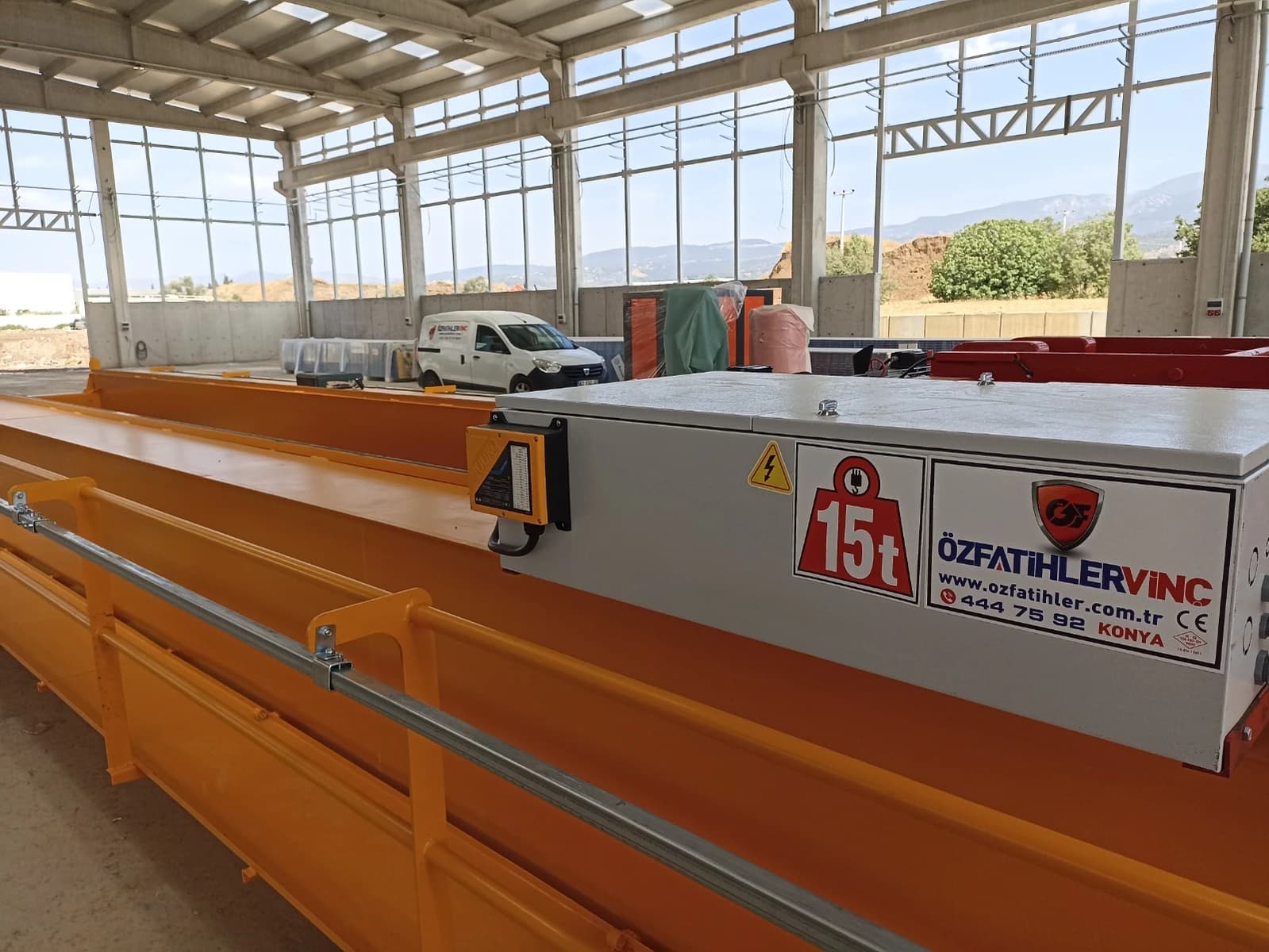
On a conventional crane, motion has two states: stopped or moving. With a variable frequency drive, speed can be set continuously. The difference is not only comfort.
Load sway
A sudden start swings the suspended load like a pendulum. The operator counter-manoeuvres to stop it, which produces a fresh swing. Gradual acceleration prevents that cycle from starting. On assembly work needing precise positioning, the time saved adds up over a day.
Mechanical load
Sudden starting and stopping applies torque to the mechanism in one hit. That load passes into gearbox teeth, couplings, wheels and rail. Controlled acceleration lowers the peak; brake linings, gears and rail last longer.
Effect on the structure
A swinging load stresses not only the hook but the bridge. Horizontal forces put fatigue load into the girder and travel unit. Smooth motion reduces that load and so affects structural life directly.
When it is not needed
Not every crane needs it. On a crane making a few lifts a day with no need for precise positioning, the extra cost may not pay back. Where duty is high, the load valuable or positioning precise, the investment returns quickly.