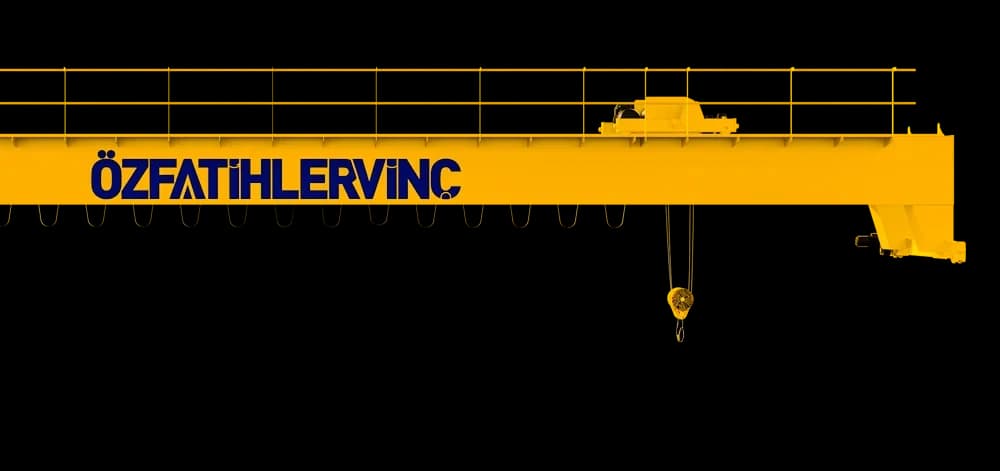
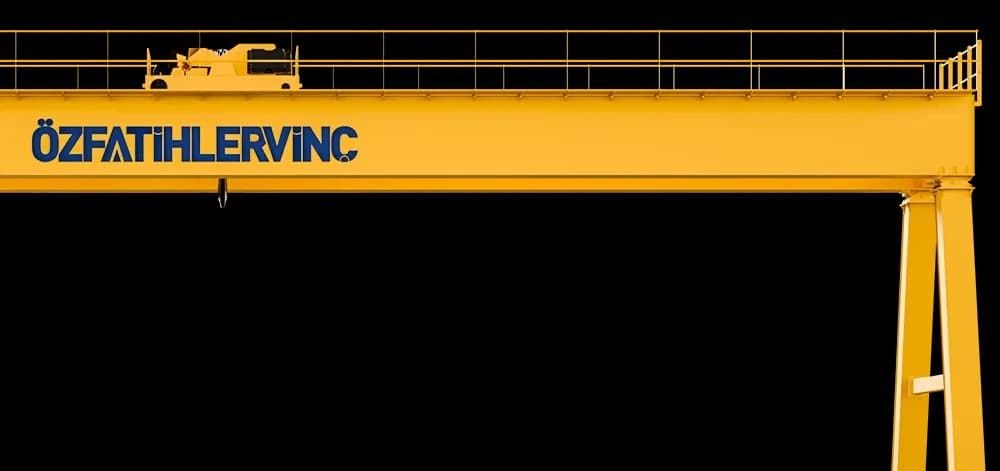
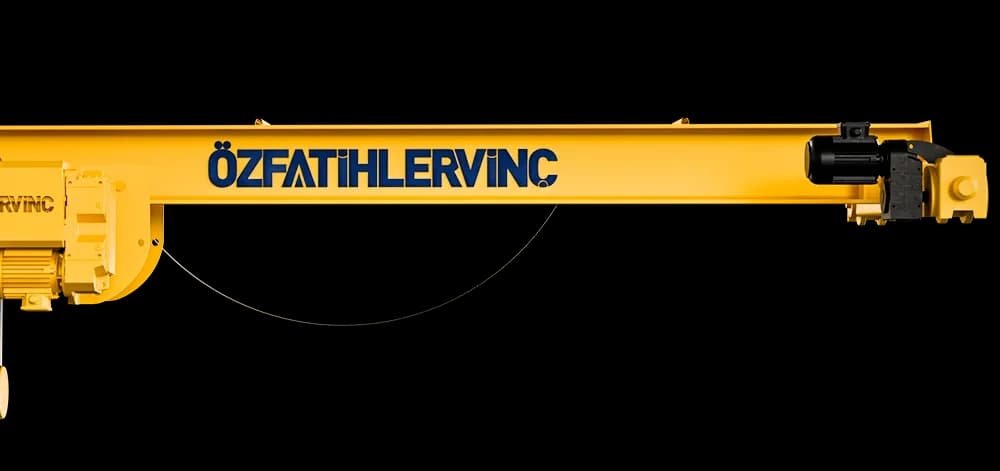
A double girder overhead crane shares the load between two main girders and carries the trolley on top of them. This arrangement allows higher capacity, longer spans and a more intensive duty cycle.
Why two girders
On a single girder the trolley hangs from the lower flange and hook travel is limited by the underside of the beam. With two girders the trolley sits on top, so the hook rises to girder level. In the same building the difference can be large enough to decide whether a long part can be lifted upright at all.
The second difference is rigidity. A two-girder structure resists torsion markedly better. On high duty-class lines — repeated lifting throughout the day — that rigidity directly extends fatigue life.
Capacity and duty class
The catalogue capacity range is 5 to 500 tonnes, with the value set per project. Duty class is selected between FEM 1Am and FEM 5M. What sets the class is not tonnage but daily operating time and load spectrum: how many cycles the crane will make over its life and how much of the rated load it carries in them.
Specify the class too low and the equipment fatigues early, with maintenance cost exceeding the difference that would have been paid up front. Too high and you pay for strength that will not be used. That is why, alongside tonnage, the quotation stage asks for the daily number of lifts and the average load ratio.
Equipment options
For long or unbalanced loads a second trolley can run on the same bridge, holding the part level on two hooks. On high-tempo lines, variable frequency drives reduce load sway and mechanical peak loading.
Walkways and handrails on the girders for maintenance access, and the need for a cabin, are assessed per project according to the operator's view of the bay.
Applications
Steel fabrication shops, foundries and forges, machine building, power plant maintenance bays, shipyard workshops.