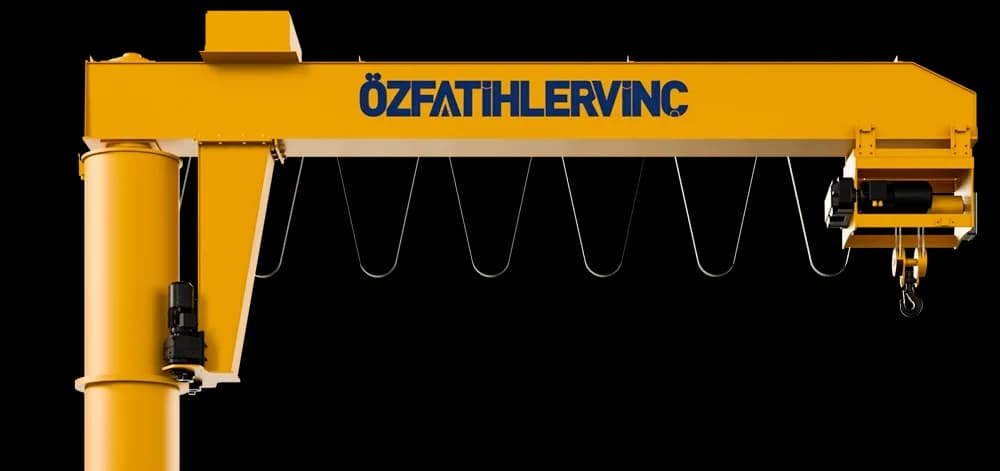
Pergel Vinçler
Boru Tip Pergel Vinç
Kendi kolonuna oturan, duvara ihtiyaç duymayan pergel. Sahanın herhangi bir noktasına konumlanır ve engel yoksa 360 derece döner; belirleyici kalem temeldir.
- Dönüş açısı
- 360°
VIEW PRODUCT
Pergel Vinçler
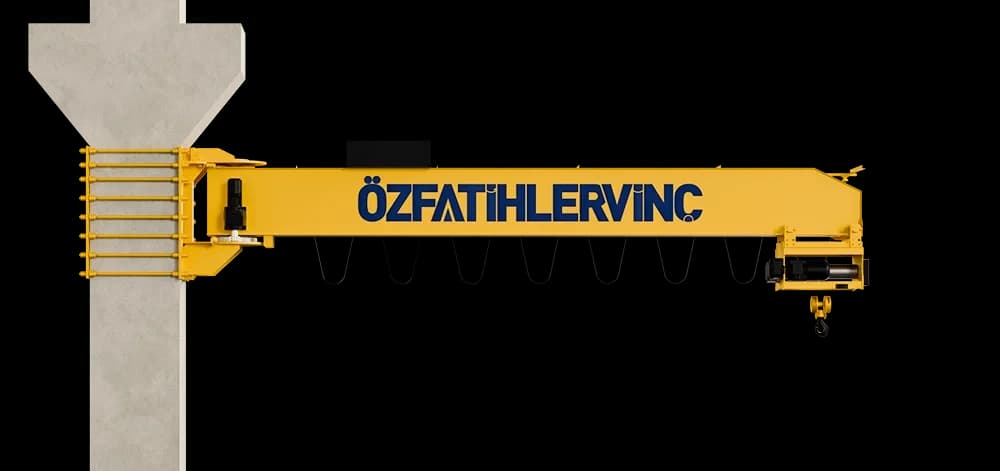
Two slewing arms mounted on the same wall line. They serve two adjacent stations from one mounting line without taking floor space; where the working circles overlap, a part passes from arm to arm.
Priced per project
Arms
2
Capacity
Calculated per project
Arm length
To the furthest point to be reached
Hoist unit
Electric hoist, selected to capacity
| Arms | 2 |
|---|---|
| Capacity | Calculated per project |
| Arm length | To the furthest point to be reached |
| Hoist unit | Electric hoist, selected to capacity |
| Number of arms | Two, on the same wall line |
| Slew angle | Limited by wall position; typically around 180° |
Where the working circles overlap, a part passes from arm to arm without hand carrying.
With no legs, forklift routes and pallet areas are unaffected.
With both arms on one line the moments can overlap, so wall capacity is assessed jointly.
In a dual jib layout two slewing arms are mounted on the same wall line. Each arm serves an adjacent station; where the working circles partly overlap, a part can be passed from one arm to the other.
Along a wall lined with welding or assembly stations, installing a separate crane at each station is both costly and space-consuming. Running two arms on a single mounting line delivers the same service with fewer fixing points and less structural reinforcement.
The second gain is transfer. When the two working circles are positioned to overlap, a part machined at the first station passes to the second without being carried by hand. In sequential processes — weld then grind, weld then assemble — that is a gain in both time and ergonomics.
Because the arms are fixed to a wall or an existing column, there are no legs on the floor. Forklift routes, pallet areas and pedestrian traffic are unaffected. In narrow workshops this is the main factor deciding between a pipe-type jib and a wall type.
A jib crane transfers into its supporting structure not only the vertical load but the moment arising from arm length. The longer the arm, the greater the moment. The moment capacity of the wall or column is therefore calculated before installation; with two arms on the same line the loads can overlap, so they are assessed together.
When measurements are taken, column section, reinforcement details and existing wall loads are recorded. Anchor plates and reinforcement are specified where required.
Arm length follows the furthest point the operator must reach; capacity follows the heaviest part to be handled. Slew angle is limited by the wall position — typically around 180 degrees. An electric hoist matched to the capacity is selected as the lifting unit.
Pergel Vinçler
Kendi kolonuna oturan, duvara ihtiyaç duymayan pergel. Sahanın herhangi bir noktasına konumlanır ve engel yoksa 360 derece döner; belirleyici kalem temeldir.
VIEW PRODUCT
Pergel Vinçler
Duvara ya da mevcut kolona bağlanan tek kollu pergel. Tezgâh başında yardımcı kaldırma noktası oluşturur; köprülü vinci küçük taşımalardan kurtarır, zeminde yer kaplamaz.
VIEW PRODUCT
Köprülü Vinçler
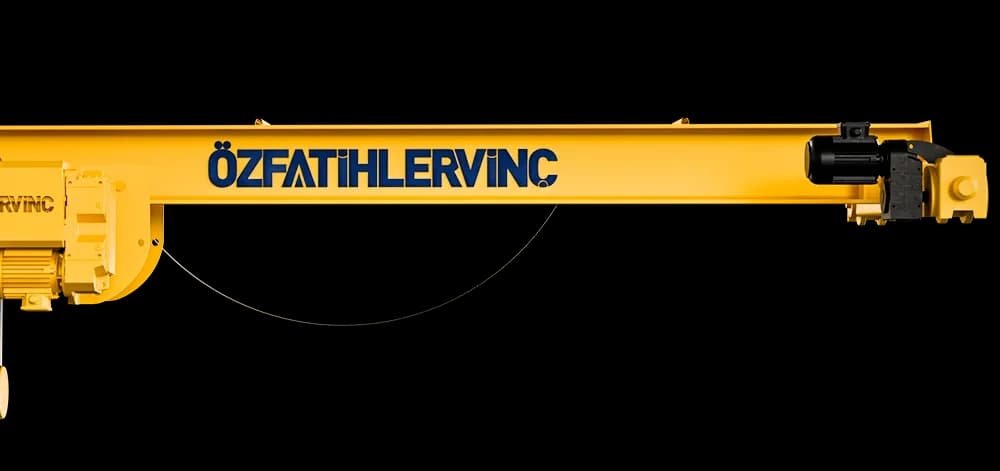
Hafif ve orta tonajda en yaygın çözüm. Tek ana kiriş ve alttan askılı kedi ile hafif yapı, düşük tekerlek yükü ve ekonomik kurulum sağlar; mevcut binaya eklemeye en uygun tiptir.
VIEW PRODUCT
Request a quote for this product