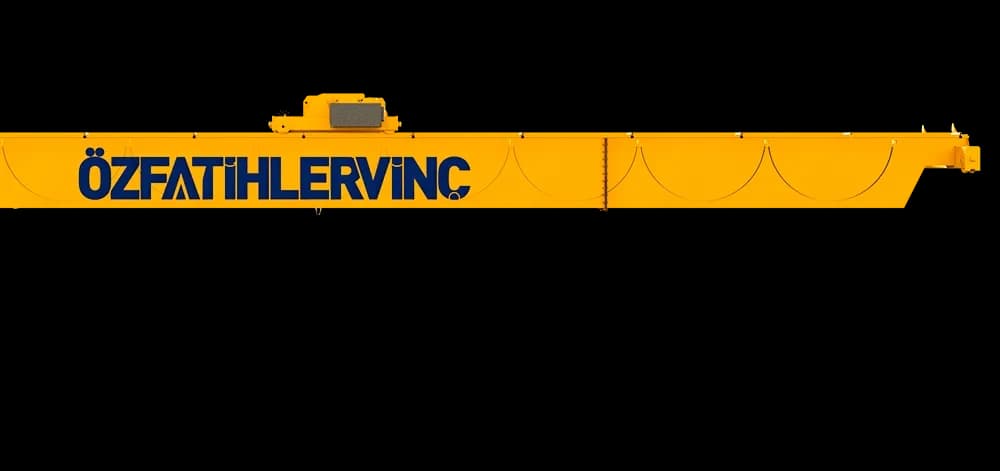
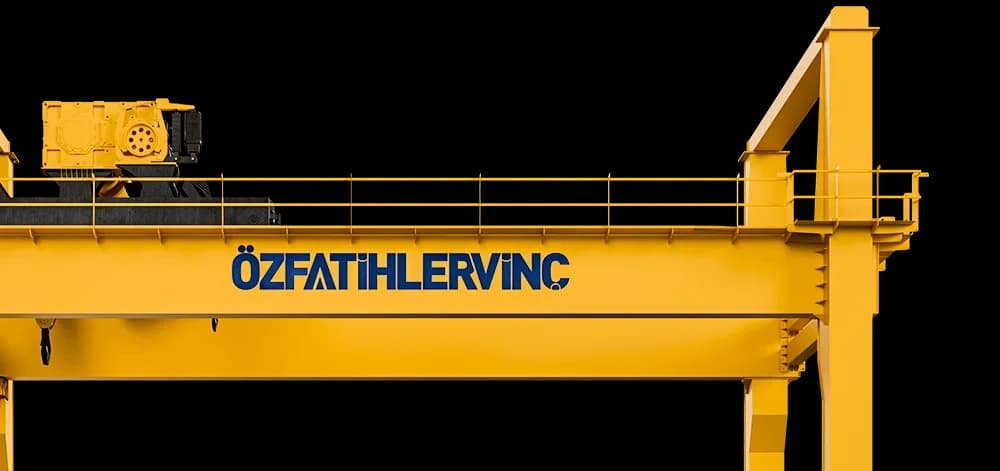
Shipyard cranes differ from a standard workshop crane on two fundamental counts: spans are far greater, and the equipment works in a salty, humid, windy environment.
The scenarios that shape the design
Lifting ship blocks, handling panels and steel plates, positioning over slipways and docks — each calls for a different hook arrangement and load distribution. A large flat panel lifted on a single hook will sway and flex; for such loads a spreader beam with twin hooks or a multi-trolley arrangement is planned.
Over long spans girder deflection enters the calculation directly. Deflection is not only a structural matter: vertical deviation at the hook makes millimetre positioning of a block harder.
Wind and open-yard work
For cranes working outdoors, wind load is a separate load case. The permitted wind speed during operation and the parked position in a storm are defined separately. Rail clamps and storm anchors tie the parked crane to the ground; an anemometer warns the operator when the limit speed is exceeded.
Corrosion protection
A marine atmosphere is aggressive to steel and electrical equipment. Surface preparation grade, paint system coat thicknesses, enclosure protection rating and fastener material are all specified for this environment. Internal surfaces of closed box sections and weld zones receive particular attention, since corrosion usually begins on the surface you cannot see.
Sizing
Span, capacity, hook arrangement and duty class are calculated per project once block weights, yard layout and duty cycle are known.