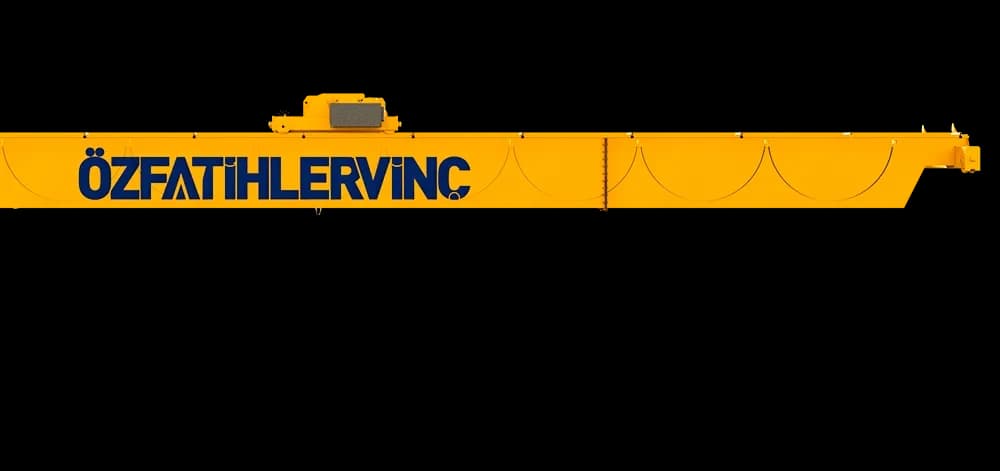
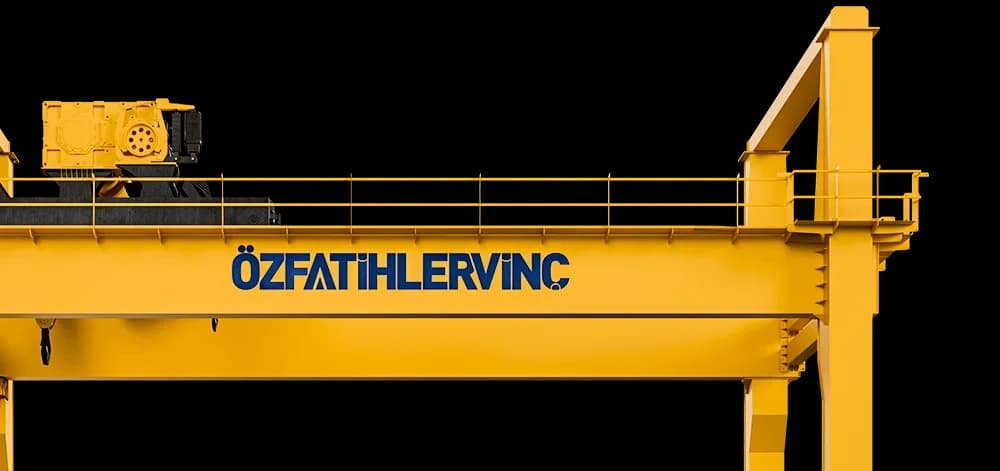
In a rotating trolley crane, the trolley travelling on the bridge can turn about its own axis. The load can therefore be rotated in place without being carried anywhere.
The problem it solves
If a long girder, pipe or vessel must pass through a narrow opening, or be set onto a machine at a particular angle, its orientation has to change. Without a rotating trolley the only way is to drive the crane back and forth and swing the load — a waste of time and a serious safety risk.
A rotating trolley handles the orientation in a single controlled movement. The part is brought to the required angle while suspended, under the operator's control.
Control and safety
Because rotation happens with the load suspended, control is the critical part of the design. Slewing speed is limited; sudden starting and stopping throws the load. The slew angle is defined by limit switches and locked at set positions where required.
The further the load's centre of gravity is from the rotation axis, the greater the throwing effect. Permitted load and radius during rotation are therefore defined together.
Structural effect
A rotating trolley transfers into the bridge not only vertical load but a moment that changes during rotation. Bridge girder and trolley travel unit are calculated for this variable loading.
Applications
Long profile and pipe production, vessel fabrication, assembly lines with narrow openings, machining centres needing angled feeding, die placement points.