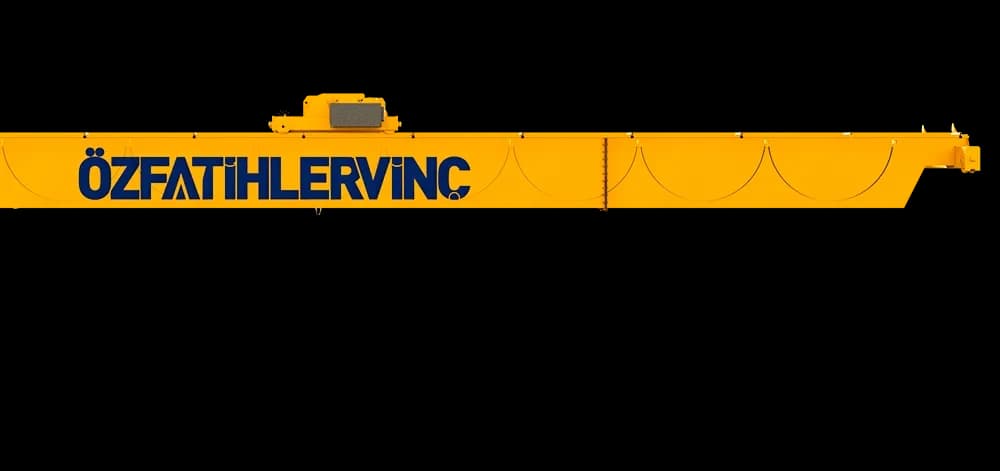
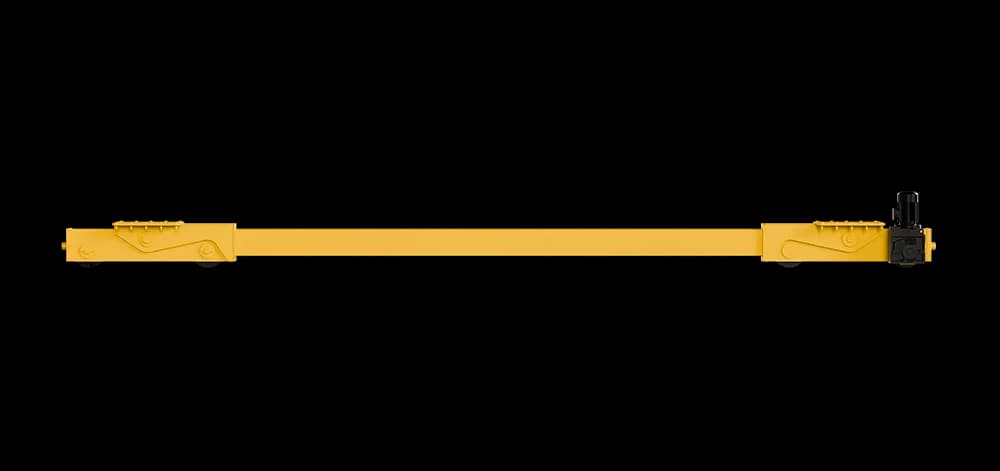
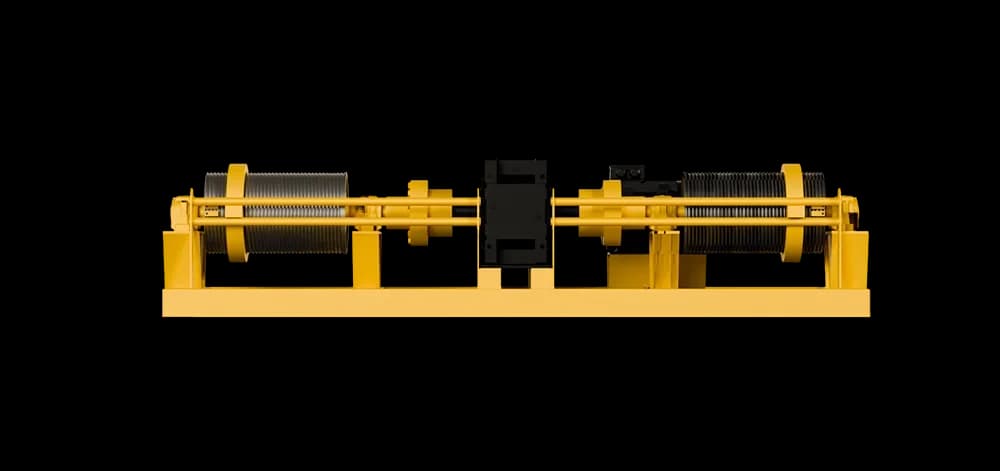
A roll transfer car moves a load from point to point on rails without lifting it. It is used for the in-line movement of steel coils, reels, dies and similar heavy parts.
Moving without lifting
A part does not always need to be lifted. If a coil only travels horizontally from one end of the line to the other, occupying the crane for that job brings no return — the crane meanwhile keeps another lift waiting.
The transfer car takes over that movement and two jobs run at once: the crane lifts, the car carries. On busy lines this parallelism directly raises daily output.
The second benefit is safety. A suspended load is always a risk; it sways, turns and can strike. A load carried horizontally on rails is outside those risks.
Cradle shaped to the part
The cradle on the car is shaped to suit the part carried. For coils and reels a V-cradle or saddle is used; the part centres itself under its own weight and does not roll. For dies, plates and box-form loads a flat deck is preferred. Where hot parts are carried, the cradle surface is made of heat-resistant material.
Drive and power supply
Motor power is selected from load weight and track length, and the braking arrangement takes the load's inertia into account. The supply method depends on track length: a cable reel on short runs, an energy chain or rail-borne supply on long ones.
Sizing
Capacity, cradle form, rail gauge, track length and speed are determined once the part and the line layout are known.