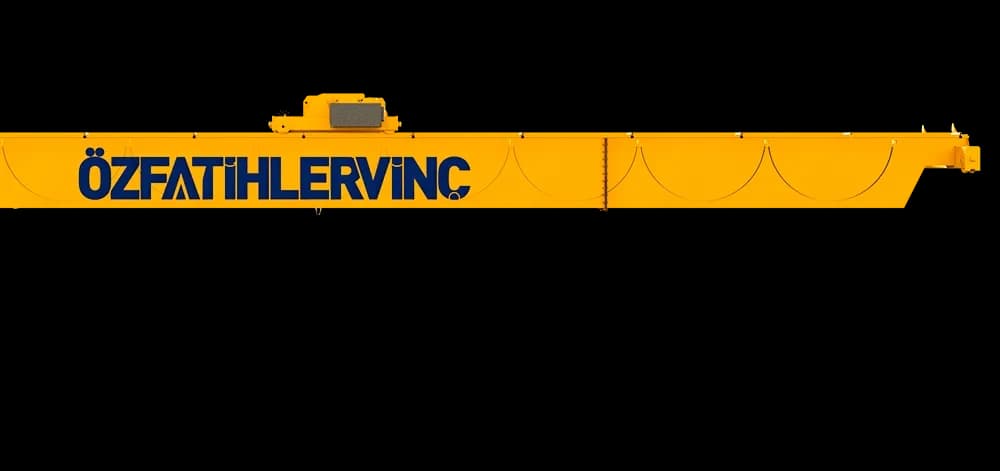
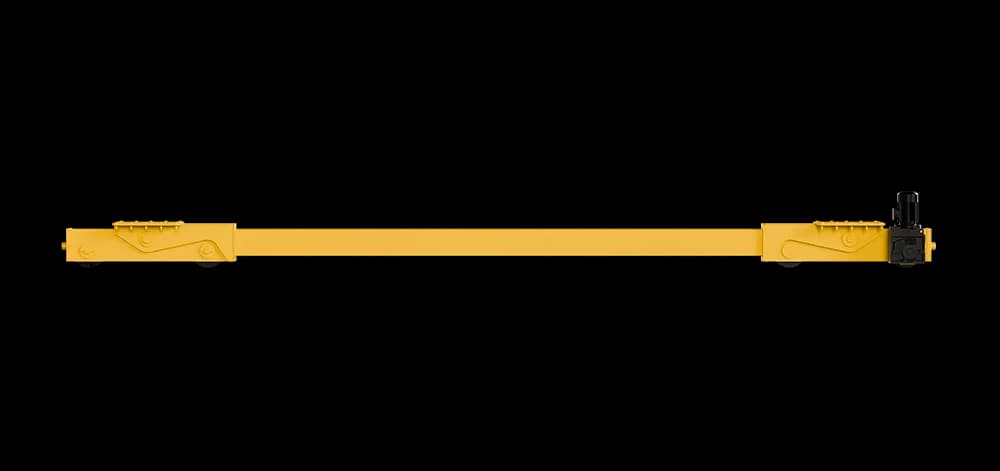
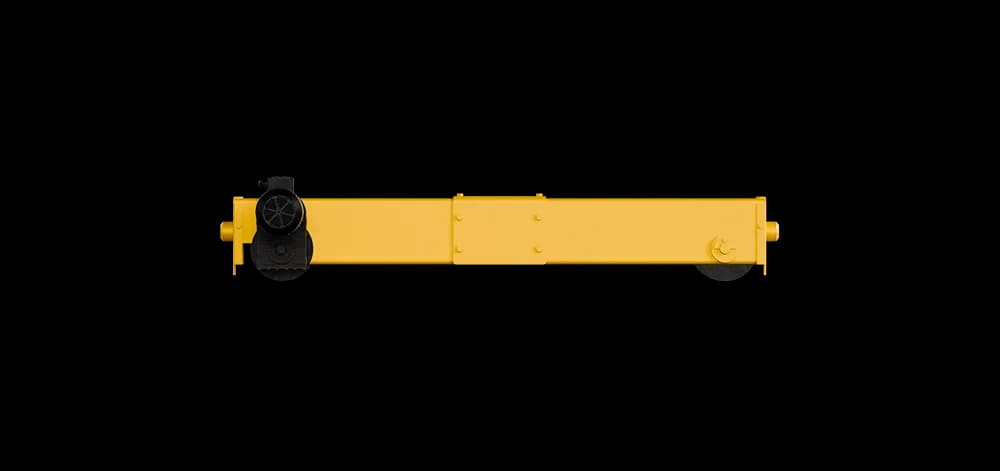
A bogie type travel unit connects the wheels not directly to the frame but to articulated intermediate carriers — bogies — which can move relative to one another.
It solves two problems at once
The first is wheel pressure. On a heavy crane, spreading the load over four wheels is often too much for the rail and the ground. A bogie arrangement increases the number of wheels; total load stays the same while pressure per wheel falls markedly, allowing a lighter rail profile and a slimmer foundation.
The second is rail unevenness. A long rail track is never perfectly straight: weld splices, differential settlement and thermal expansion create small level differences. With rigidly mounted wheels these differences make some wheels carry the full load while others lift clear. An articulated bogie damps that difference and keeps the load balanced across the wheels.
Where it is preferred
High-capacity gantry and overhead cranes, yards with limited ground bearing capacity, long and aged rail tracks, and outdoor lines exposed to thermal expansion.
Sizing
The number of bogies and the number of wheels on each are set from the total load and the wheel pressure the ground allows. Maintenance of the articulation points is included in the periodic plan; wear there degrades load sharing over time.